
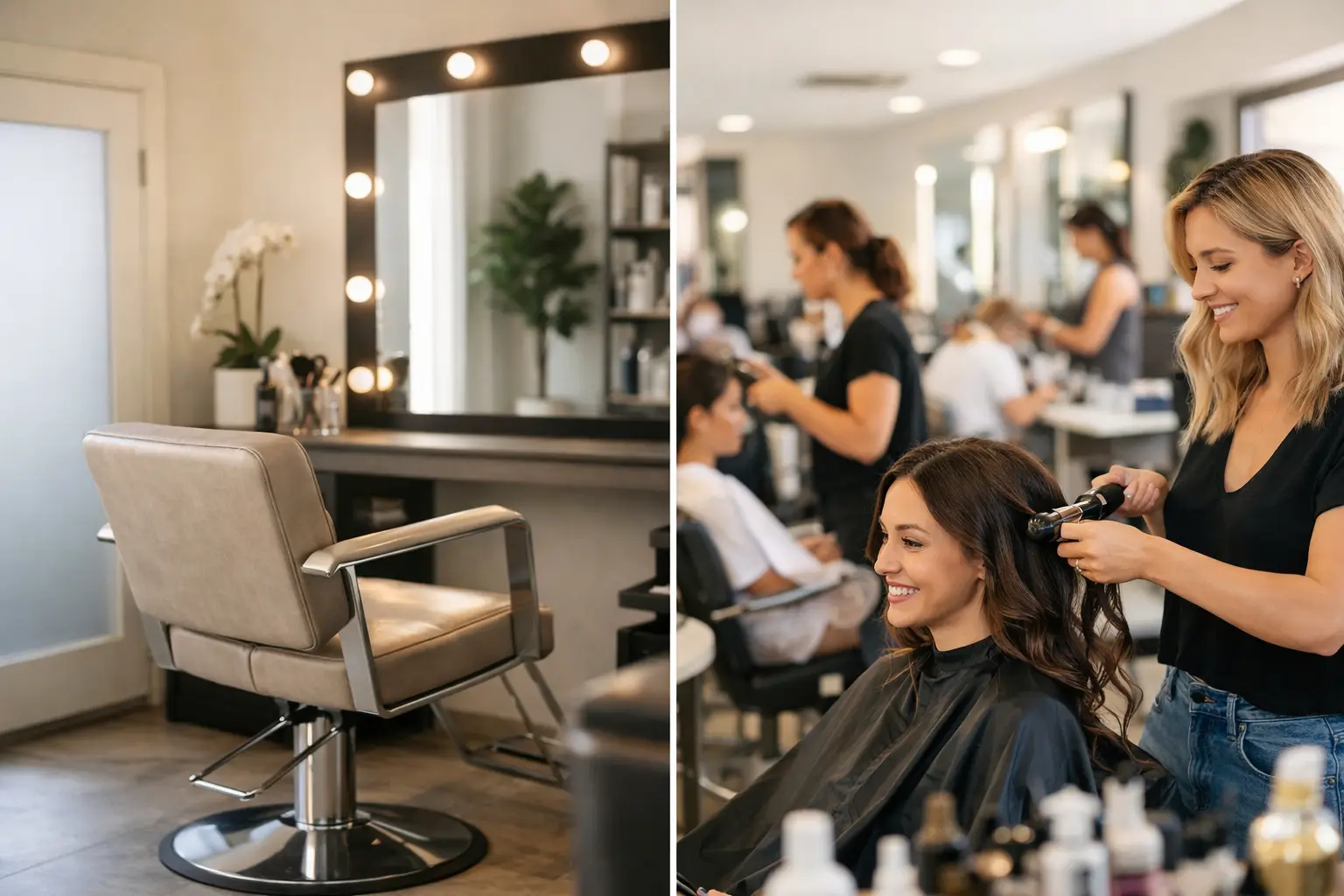
A private studio vs shared salon decision changes far more than where you take appointments. It shapes how clients perceive your brand, how freely you set your schedule, and how much control you have over the income you work hard to earn. For beauty and wellness professionals ready to build a business with intention, the right environment can become a genuine growth advantage.
Private Studio vs Shared Salon: The Core Difference
A shared salon places multiple professionals in one open environment. You may have a chair, station, or assigned area, but the atmosphere, operating hours, client flow, noise level, and overall experience are shaped by the entire salon.
A private salon studio gives you your own dedicated space behind a door. You operate independently, create a personalized environment, manage your own client relationships, and deliver services without competing with nearby conversations, music, or appointments. It is a more elevated model for professionals who want their business to look and feel like their own.
Neither option is automatically right for every stage of a career. A shared salon can provide community and a lower barrier to entry. But for established professionals, specialists, and ambitious entrepreneurs, a private studio often offers the control needed to grow beyond the limits of a traditional salon floor.
Client Experience Starts With Privacy
Your clients notice the setting before the service begins. In a shared salon, a client may be greeted by a busy room, overlapping conversations, chemical odors, crowded waiting areas, and limited personal space. That can work for a quick, social appointment, but it does not always match a premium service experience.
In a private studio, the appointment feels more personal from the moment a client walks in. You can control the lighting, music, scent, décor, and pace of the visit. A color client can relax without hearing every conversation at the next station. An esthetics guest can receive a treatment in a quieter, more comfortable setting. A permanent makeup or wellness professional can offer the discretion clients expect when discussing personal goals.
This privacy is not simply a luxury detail. It supports trust, stronger consultations, and repeat visits. When clients feel they have your full attention, they are more likely to view your services as specialized, intentional, and worth the investment.
More Control Over Your Brand and Services
In a shared salon, your brand lives beside everyone else’s. The salon’s visual identity, pricing culture, retail approach, policies, and reputation can all influence how your clients see you. Even if your work is exceptional, it can be difficult to create a distinct experience when every professional operates in the same open room.
A private studio gives you room to present your business at the level you want to reach. You can select a design direction that reflects your specialty, display the retail products you believe in, and organize your station around the way you work best. A luxury blonding specialist, barber, lash artist, massage professional, and nail technician may all require different environments. A dedicated studio lets each business operate with purpose rather than compromise.
It also gives you flexibility to refine your service menu. You can focus on the clients and treatments that align with your expertise, instead of fitting into a one-size-fits-all salon culture. That clarity makes marketing easier and helps clients remember exactly why they should book with you.
Income Potential Depends on What You Control
Many professionals compare rent or weekly costs first. That number matters, but it is only part of the financial picture. The more useful question is: which model gives you the strongest ability to build revenue on your terms?
In a traditional shared salon, compensation may involve commission splits, chair-rental restrictions, or policies that limit your independence. You may have less authority over pricing, promotions, retail sales, and service timing. A supportive salon can help you build early momentum, but its model may eventually cap your earning potential.
With a private studio, you set your own prices and retain the revenue you generate after business expenses. You decide whether to offer premium add-ons, memberships, retail, package services, or extended appointments. You also choose the systems that protect your profitability, from your booking platform to your cancellation policy.
Private studio ownership does require business discipline. You are responsible for building demand, managing inventory, maintaining insurance, tracking expenses, and planning for slower seasons. Yet those responsibilities are often the trade-off for meaningful financial autonomy. When your expertise increases, your pricing and business model can evolve with it.
Scheduling Freedom Has Real Value
Shared salons often operate around fixed schedules, front-desk procedures, and building rules. That structure can be helpful if you prefer clear boundaries, but it may not support clients who need early-morning, evening, or weekend appointments.
A private studio typically gives you more flexibility to build a schedule around your life and your market. You can reserve mornings for high-value color appointments, offer evening sessions for working professionals, or create a four-day schedule that protects your personal time. For a parent, a part-time educator, or a professional balancing multiple responsibilities, that freedom can be as valuable as higher income potential.
At an upscale salon suite location with 24-hour access, you are not limited to someone else’s idea of a productive workday. You can prepare for a major service before business hours, complete administrative tasks after appointments, and create a more convenient booking experience for loyal clients.
Community Is the Strongest Argument for a Shared Salon
The most compelling advantage of a shared salon is community. New professionals may appreciate being around experienced stylists, seeing how others manage consultations, and enjoying daily interaction with peers. Shared spaces can feel energetic, collaborative, and less intimidating when you are still developing confidence.
A private studio is quieter by design, which can feel isolating if you depend on a busy salon floor for connection or referrals. Independence works best when you are comfortable making decisions, communicating with clients directly, and actively building your own professional network.
That does not mean private studio professionals have to work alone. They can build community through education, industry events, local partnerships, social media, and relationships with other suite owners. The difference is that the community becomes intentional rather than constant. You can enjoy professional connection without giving up the focus and privacy of your workspace.
Consider Your Specialty Before You Choose
Your services should influence your decision. High-volume haircutting, walk-in traffic, and a social styling environment may fit well in a shared salon. If you are early in your career and need exposure to a broad range of clients, that model can provide useful experience.
Private studios are especially compelling for appointment-based professionals whose work benefits from focus, privacy, or a polished one-on-one experience. Estheticians, permanent makeup artists, lash artists, massage therapists, color specialists, extension experts, and wellness providers often find that a dedicated studio better reflects the premium nature of their services.
Location matters as well. A beautiful studio in an upscale, high-traffic area can reinforce your positioning before a client even reaches your door. For Phoenix-area entrepreneurs, Belle Vie Salon Studios pairs that elevated presentation with turn-key spaces, elegant common areas, high-speed internet, HD security, and the operational convenience of a professional setting built for independent business owners.
Questions to Ask Before Signing
Before choosing a studio or shared salon, look beyond the monthly rate. Ask how much control you will have over your schedule, pricing, products, policies, and client communications. Consider whether the environment matches the clientele you want to attract, not only the clients you serve today.
Also examine the practical details. Is the space ready for your services? Are utilities, internet, security, laundry access, and common-area upkeep clearly addressed? Can clients park easily and feel comfortable when they arrive? Transparent terms protect your business from surprises and help you plan with confidence.
Finally, be honest about your goals. If you want mentorship, immediate social energy, and minimal responsibility, a shared salon may be a smart next step. If you want to establish a recognizable brand, raise your prices thoughtfully, and create a client experience that belongs entirely to you, a private studio may be the better investment.
The best workspace is the one that makes your next level feel possible. Choose a setting that respects your talent, supports the way you want to work, and gives your clients a reason to come back to your business – not just to a salon.